Source Customizable Cartoon Characters Anime Dolls for Gifts
Compare 30 listings of customizable cartoon characters anime dolls featuring plastic or plush materials, various certifications, and OEM options. Buyers can evaluate suppliers based on mold costs, sample availability, and production timelines for promotional or collection purposes.
Key considerations
Products List




Comprehensive Sourcing Guide
Strategic Sourcing Guide for Customizable Cartoon Character Anime Dolls
The global market for customizable cartoon character anime dolls represents a dynamic intersection of creative design, manufacturing precision, and commercial utility. For procurement professionals, navigating this sector requires a disciplined approach that balances aesthetic customization with rigorous supply chain verification. The core product category encompasses a wide array of items, ranging from rigid plastic figures to soft plush variants, all sharing the common thread of being tailored to specific client requirements. This guide outlines the essential technical, compliance, and operational factors necessary for successful sourcing in this specialized domain.
Technical Specifications and Material Composition
Understanding the material and technical specifications is the foundational step in defining product requirements. The supply base for these items is diverse, primarily utilizing plastic-based materials such as PVC, ABS, Resin, TPR, PP, PS, and PC. The selection of material significantly influences the final product's texture, durability, and safety profile. For instance, products designed for younger demographics or those requiring a soft tactile experience often rely on TPR or specific plush compositions, whereas rigid collectibles may utilize ABS or resin.
The manufacturing processes employed vary based on the desired complexity and finish. Common technologies include roto casting, injection molding, and ultrasonic processing. For highly detailed anime figures, the "opening of a new mould" is a frequent requirement, allowing for unique character designs that cannot be achieved with existing stock molds. The weight of the final product is typically customizable, dictated by the specific dimensions and material density chosen.
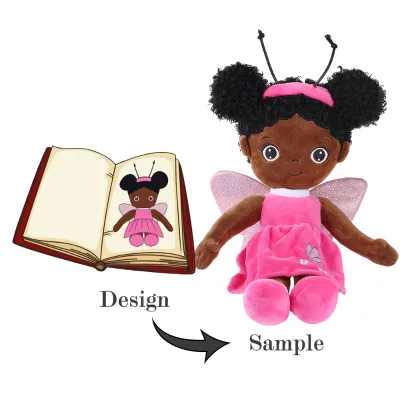
Furthermore, the customization extends beyond the physical form to the visual presentation. Suppliers often offer full-color logo printing and pad print options, ensuring that branding elements are integrated seamlessly. The shape of the product is generally categorized as an "article" or specific figure, with dimensions that can be tailored to the client's specifications or based on provided reference pictures. The availability of 3D drawing services, either provided by the client or the manufacturer, is a critical technical enabler for the prototyping phase.
Compliance and Certification Verification
In the realm of toy manufacturing, particularly for items intended for children or promotional use, compliance is non-negotiable. The supplied data indicates a robust landscape of certifications that buyers must verify. High-confidence facts highlight the presence of ENASTM and CE certifications, alongside specific standards such as EN71, ASTM, Cpsia, and Reach. These standards are critical for ensuring that the products meet international safety requirements regarding chemical composition, mechanical hazards, and flammability.
For buyers targeting the European market, the EN71 standard is a primary benchmark, while the US market often requires adherence to ASTM F963 and Cpsia regulations. The data also notes the presence of BSCI and ISO9001 certificates, which speak to the social responsibility and quality management systems of the manufacturing facility. It is imperative for procurement teams to request current, valid copies of these certificates for every batch of production, rather than relying on general supplier claims.
The verification process should extend to the specific test reports associated with these certifications. Buyers must confirm that the specific materials used, such as Eco-Friendly PVC or ABS, have been tested against the relevant heavy metal and phthalate limits. The "Test" attribute listed as ASTM/En71 suggests that third-party laboratory testing is a standard part of the production workflow. However, buyers should not assume that all listed products automatically satisfy every standard; verification of the specific test report for the exact model number, such as SHC01 or SH2501, is essential.
Cost Drivers and Pricing Structures
The pricing of customizable anime dolls is influenced by a complex matrix of variables, including material selection, mold costs, order volume, and the complexity of the design. The observed price range in the market spans from $0.10 to $20.60 USD, a wide spectrum that reflects the difference between simple promotional items and high-fidelity collectible figures.
A primary cost driver is the "Mould Cost," which is explicitly noted as depending on size, quantity, material, and technology. For custom designs requiring a new mould, this is a significant upfront investment that is often amortized over the production run. Buyers must negotiate whether this cost is included in the unit price or charged separately. Additionally, the "Sample Fee" is often waived, with suppliers offering free samples to facilitate design approval, though the sample time of 3-7 working days should be factored into the project timeline.
The Minimum Order Quantity (MOQ) is another critical financial factor, with observed ranges between 50 and 3000 units. Lower MOQs may incur higher per-unit costs due to setup inefficiencies, while larger orders benefit from economies of scale. The production time, typically around 20 days or adjusted according to order quantity, also impacts the overall cost structure, particularly if expedited shipping is required to meet launch dates.
Typical Applications and Usage Scenarios
The versatility of customizable cartoon character anime dolls allows them to serve multiple commercial functions. The data identifies usage categories including "Funny," "Particular Toys," "Promotion," and "Gift." This broad applicability makes them suitable for a variety of industries.
In the promotional sector, these items are frequently used as branded giveaways. The ability to print full-color logos and stickers allows companies to integrate their branding directly onto the character. The "OEM Factory" status of many suppliers confirms their capacity to produce items specifically for corporate branding campaigns. For the retail sector, these dolls function as "Gift Figurine" or "Collection Toys," appealing to collectors and fans of specific anime franchises.
The target demographic is generally "Unisex" and suitable for ages greater than 8 years, though specific product lines may cater to younger audiences depending on the material safety profile. The "Feature" of being "Soft Comfortable" suggests a specific sub-category of plush dolls designed for emotional connection or comfort, distinct from rigid plastic figures. Understanding the intended end-use is crucial for selecting the correct material and certification profile, as a promotional item for a trade show has different requirements than a retail collectible intended for long-term display.
Supplier Evaluation and Manufacturing Capabilities
When evaluating potential suppliers, buyers must look beyond the basic product listing to assess the depth of the manufacturing capability. The presence of "OEM/ODM" acceptance indicates that the supplier is equipped to handle both Original Equipment Manufacturing and Original Design Manufacturing. This is vital for clients who have unique character designs that require a partner capable of translating 3D drawings into physical products.
Key evaluation criteria include the supplier's experience with "Mould" creation, specifically their ability to "Openning New Mould" for custom projects. The "Technical" attribute of "Hand-Made" for certain plush items suggests a level of artisanal quality that may be desirable for high-end collectibles. Buyers should verify the supplier's location, with "China" and specifically "Guangdong, China" being noted origins, which are established hubs for toy manufacturing.
The "Original Package" attribute being "Yes" indicates that the supplier handles the primary packaging, which is essential for maintaining product integrity during transit. Additionally, the "Packing" specification of 30-40 pieces per carton provides insight into logistics planning. A supplier that accepts "Customized" packing and labeling, including hang tags, offers greater flexibility for retail distribution.
Quality Control and Production Management
Maintaining quality throughout the production lifecycle requires a structured approach to quality control (QC). The "Sample Time" of 3-7 working days allows for a critical review phase before mass production begins. Buyers should utilize this period to verify that the physical sample matches the 3D drawings and that the material feel, color accuracy, and print quality meet expectations.
The "Production Time" of approximately 20 days is a standard benchmark, but it is noted as variable "According to Order Quantity." This variability necessitates clear communication regarding lead times. Quality control should be embedded in the process, with the supplier's adherence to standards like ISO9001 serving as a baseline for consistency.
Inspection protocols should focus on the "Imprint" quality, ensuring that logo stickers and pad prints are durable and correctly aligned. For plastic figures, checks should include structural integrity and the absence of flash or molding defects. For plush items, the "Soft Comfortable" feature must be consistent across the batch, with attention paid to stitching quality and stuffing distribution. The "Test" attribute referencing ASTM/En71 implies that safety testing is part of the QC process, but buyers should insist on receiving the specific test reports for their order batch.
Long-Term Procurement Considerations
Sourcing customizable anime dolls is not merely a transactional activity but a strategic partnership that requires long-term planning. The ability to customize the "Logo," "Color," and "Size" allows for brand evolution and product line expansion. However, this flexibility comes with the responsibility of managing intellectual property and design rights, especially when dealing with "Modelling Source: Custom" projects.
Buyers should consider the scalability of their supplier. As order volumes grow, the supplier must be able to maintain consistent quality and lead times. The "Material Range" being extensive (Eco-Friendly PVC/ABS/Resin/TPR/PP/PS/PC etc.) suggests that suppliers can adapt to changing sustainability trends or material cost fluctuations.
Finally, the "Sample Fee" being "Free of Charge" and the "Sample" availability are positive indicators of supplier confidence. However, buyers should be aware that while samples are free, the logistics of shipping them may not be. Establishing a clear communication channel for design iterations and maintaining a detailed record of all specifications, including model numbers like SHC01 or HW000000, will ensure continuity and reduce the risk of errors in future production runs. By adhering to these structured procurement principles, buyers can effectively navigate the complexities of the customizable toy market.
FAQs
What certifications do these dolls have?
Products typically hold CE, EN71, ASTM, Cpsia, and Reach certifications. Some listings also include BSCI and ISO9001 certificates for quality management. Buyers must verify specific test reports for each batch to ensure compliance with target market safety standards.
Can I customize the logo and color?
Yes, full-color logo printing and pad print options are available. Colors can match pictures or be customized to client requirements. The imprint can be applied as a sticker or directly onto the plastic figure or plush doll surface.
What is the minimum order quantity?
The minimum order quantity ranges from 50 to 3000 units depending on the supplier and product model. Lower MOQs may result in higher per-unit costs, while larger orders benefit from economies of scale in production and shipping.
How long does production take?
Production time is approximately 20 days, though it varies according to the order quantity. Sample preparation takes 3 to 7 working days before mass production begins. Buyers should confirm specific lead times based on their final order volume.
What materials are used for manufacturing?
Materials include Eco-Friendly PVC, ABS, Resin, TPR, PP, PS, and PC. The choice depends on whether the product is a rigid figure or a soft plush doll. Suppliers offer various material options to meet specific texture and safety requirements.
Are samples available for free?
Sample fees are often free of charge for design approval. However, shipping costs for samples may apply. The sample time is typically 3 to 7 working days, allowing buyers to verify quality before committing to a large order.